Friday, November 30, 2012

Petition to “Gatorade” to remove “flame retardant” chemicals in their products:

Gatorade: Don’t put flame retardant chemicals in sports drinks!The other day, I Googled "brominated vegetable oil." It was the last time I drank Orange Gatorade. I found out that this "BVO" is a controversial flame retardant chemical that is in some Gatorade drinks! Who wants to drink that? Not me!

I’m naturally a curious and argumentative person doing things like debate team in school. I also love sports like volleyball, and I always believed Gatorade when they said stuff in their ads about how it's good to drink when exercising. And, just like most people, I care about my health. So, as I was sitting at home the other day drinking an Orange Gatorade, I decided to look up some of the ingredients.

The last ingredient is "brominated vegetable oil," which has been banned in Japan and the European Union. That means, #1 it’s not necessary to make Gatorade, and #2 there is enough information out there that entire countries have banned this chemical product.

According to Scientific American, BVO has been patented as a flame retardant and is found in some beverages including some flavors of Gatorade. It is “under intense scrutiny because research has shown that they are building up in people's bodies, including breast milk, around the world.” The same article also mentions that there are “links to impaired neurological development, reduced fertility, early onset of puberty and altered thyroid hormones.”

I’m not a scientist, but if there are lots of suspicious things about putting a flame retardant chemical in Gatorade (most flavors don’t even use it!) then why would Gatorade want to put it in a product designed for people like me who are into sports and health?

It doesn’t make sense. Please sign the petition asking Gatorade to stop putting flame retardant chemicals in sports drinks.

Thursday, November 29, 2012

Why Are We Testing Newborns for Pot?

The science is alarmingly inconclusive, but the punishment for mothers is severe.

November 23, 2012  |  

Employees at US hospitals are testing more and more newborns for cannabis exposure. And, with alarming frequency, they are getting the wrong results. So say a pair of recent studies documenting the unreliability of infant drug testing.


In the most recent trial, published in the September edition of the Journal of Clinical Chemistry , investigators at the University of Utah School of Medicine evaluated the rate of unconfirmed "positive" immunoassay test results in infant and non-infant urine samples over a 52-week period. Shockingly, authors found that positive tests for carboxy THC, a byproduct of THC screened for in immunoassay urine tests, were 59 times less likely to be confirmed in infant urine specimens as compared to non-infant urine samples. Overall, 47 percent of the infant positive immunoassay urine samples evaluated did not test for the presence of carboxy THC when confirmatory assay measures were later performed.
Immunoassay testing – the standard technology used in workplace drug testing – relies on the use of antibodies (proteins that will react to a particular substance or a group of very similar substances) to document whether a specific reaction occurs. Therefore, a positive result on an immunoassay test presumes that a certain quantity of a particular substance may be present in the sample, but it does not actually identify the presence of the substance itself. A more specific chemical test, known as chromatography, must be performed in order to confirm any preliminary analytical test results. Samples that test positive on the presumptive immunoassay test, but then later test negative on the confirmatory test are known as false positives.
False positive test results for cannabis’ carboxy THC metabolite are relatively uncommon in adult specimens. Among newborns’ specimens, however, false positive results for alleged cannabis exposure are disturbingly prevalent.
In April, researchers at the University of North Carolina reported in the journal Clinical Biochemistry that various chemicals present in various baby wash products, such as Johnson's Head-to-Toe Baby Wash and CVS Baby Wash, frequently cross-react with the immunoassay test to cause false positive results for carboxy THC.

“[The] addition of Head-to-Toe Baby Wash to drug-free urine produced a dose dependent measureable response in the THC immunoassay,” the investigators concluded . “Addition of other commercially available baby soaps gave similar results, and subsequent testing identified specific chemical surfactants that reacted with the THC immunoassay. … Given these consequences, it is important for laboratories and providers to be aware of this potential source for false positive screening results and to consider confirmation before initiating interventions.”

Following the publication of the UNC study, researchers at the University of Utah screened for the presence of baby soap contaminants in infant urine. Surprisingly, they didn’t find any . Rather, they concluded that the disproportionately high rate of false positive test results discovered among their samples were the result of a cross-reaction with some other yet-to-be determined constituent. They cautioned: “Until the compounds contributing to positive urine screen results in infants are identified, we encourage the use of alternative specimens for the detection and investigation of neonatal exposure to cannabinoids. Screen-positive cannabinoid results from infant samples should not be reported without confirmation or appropriate consultation, because they cannot currently be interpreted.”
Yet despite these warnings, in many instances, hospitals fail to confirm the results of presumptive drug tests prior to reporting them to state authorities. (Because confirmatory testing is more expensive the immunoassay testing, many hospitals neglect to send such presumptive positive urine samples to outside labs for follow-up analysis.) Ironically, such confirmatory tests are required for all hospital employees who test positive for illicit substances. But presently, no such guidelines stipulate that similar precautions be taken for newborns or pregnant mothers. Explains Lynn Paltrow, executive director of National Advocates for Pregnant Women : “NAPW has had calls from numerous parents who were subjected to intrusive, threatening, and counterproductive child welfare interventions based on false or innocent positive test results for marijuana. We have learned that pregnant patients receive fewer guarantees of accuracy than do job applicants at that same hospital.” 

Regardless of whether or not the drug screen results are confirmed, the sanctions for those subjects who test positive are often swift and severe. Typically, any report of alleged infant exposure to cannabis will trigger a host of serious consequences ranging from the involvement of social services to accusations of child endangerment or neglect. In some instances, mothers whose infants test positive for carboxy THC will lose temporary child custody rights and be mandated to attend a drug treatment program. In other instances they may be civilly prosecuted. At least 18 states address the issue of pregnant women’s drug use in their civil child neglect laws; in 12 states prenatal exposure to any illegal drug is defined by statute as civil child abuse. (One state, South Carolina, authorizes the criminal prosecution of mothers who are alleged to have consumed cannabis, or any other illicit substance, during pregnancy and carry their baby to term.) 
Of further concern is the reality that the hospital staff’s decision to drug test infants or pregnant mothers appears to be largely a subjective one. There are no national standards delineating specific criteria for the drug testing of pregnant women, new mothers, or their infants. In fact, the only federal government panel ever convened to advise on the practice urged against its adoption. As a result, race and class largely influence who is tested and who isn’t. A study published in the  Journal of Women's Health reported that "black women and their newborns were 1.5 times more likely to be tested for illicit drugs as non-black women," after controlling for obstetrical conditions and socio-demographic factors, such as single marital status or a lack of health insurance. A separate study published in the New England Journal of Medicine reported similar rates of illicit drug consumption during pregnancy among both black and white women, but found that “black women were reported [to health authorities] at approximately 10 times the rate for white women.”
How many mothers have been accused of child neglect or abuse because of false positive drug test results? Nobody knows for sure. But no doubt some mothers have been penalized solely as a result of the test’s inherent fallibility – and many more are likely to face similar sanctions in the future. That’s because the practice of drug testing infants for cannabis exposure remains a relatively popular even though there exists limited, if any, evidence to justify it.
“No child-health expert would characterize recreational drug use during pregnancy as a good idea,” writes Time.com columnist Maia Szalavitz. “But it’s not at all clear that the benefits, if any, of newborn marijuana screening – particularly given how selectively the tests are administered – justify the potential harm it can cause to families.”
Richard Wexler, executive director of the National Coalition for Child Protection Reform agrees, telling Time.com that the emotional damage caused by removing an infant child from their mothers, as well as the risk of abuse inherent to foster care, far outweigh any risks to the child that may be caused by maternal marijuana use during pregnancy. 
In fact, the potential health effects of maternal marijuana use on infant birth weight and early development have been subject to scientific scrutiny for several decades. One of the earliest and most often cited studies on the topic comes from Dr. Melanie Dreher and colleagues, who assessed neonatal outcomes in Jamaica, where it is customary for many women to ingest cannabis, often in tea, during pregnancy to combat symptoms of morning sickness. Writing in the journal  Pediatrics in 1994, Dreher and colleagues reported no significant physical or psychological differences in newborns of heavy marijuana-using mothers at three days old, and found that exposed children performed better on a variety of physiological and autonomic tests than non-exposed children at 30 days. (This latter trend was suggested to have been a result of the socio-economic status of the mothers rather than a result of pre-natal pot exposure.)
Separate population studies have reported similar results. A 2002 survey of 12,060 British women reported, “[C]annabis use during pregnancy was unrelated to risk of perinatal death or need for special care.” Researchers added that “frequent or regular use” of cannabis throughout pregnancy may be associated with “small but statistically detectable decrements in birthweight.” However, the association between cannabis use and birthweight failed to be statistically significant after investigators adjusted for confounding factors such as the mothers' age, pre-pregnancy weight, and the self-reported use of tobacco, alcohol, caffeine, and other illicit drugs.”

THIS STORY CONTINUES THRU THIS LINK....PLEASE CONTINUE READING

Tuesday, November 27, 2012

Rand Paul: Relax Marijuana Penalties, Allow States To Determine Pot Policy


Sen. Rand Paul (R-Ky.) continued to field questions this week about a possible entrance into the 2016 Republican presidential mix, reinforcing his views that legal penalties for marijuana offenses should be reduced and that states should be responsible for crafting their own laws regarding the plant.

In an interview with ABC, Paul said that while he did not personally support marijuana being legalized, or even used, for that matter, he did believe that punishments surrounding it were overly harsh.

"I think for example we should tell young people, 'I'm not in favor of you smoking pot, but if you get caught smoking pot, I don't want to put you in jail for 20 years,'" Paul said.

The senator went on to argue that states such as Washington and Colorado, which both voted to legalize and tax marijuana earlier this month, should be permitted to have their moves stand, despite running contrary to federal laws determining the drug to be an illegal substance.

"States should be allowed to make a lot of these decisions," Paul said. "I want things to be decided more at a local basis, with more compassion. I think it would make us as Republicans different."

He made similar comments in an earlier interview with Politico, saying that he planned to reach across the aisle to Senate Democrats in hopes of addressing his concerns with marijuana sentencing legislatively.

Both Paul and his father, retiring Rep. Ron Paul (R-Texas), have been outspoken proponents of states' rights and compassion when it comes to marijuana laws. They've also both been avid supporters of legalizing the production of industrial hemp, a non-psychoactive relative of marijuana that has been caught up in the wider net of drug laws.

CONTINUE READING...

Marc Emery on Ron Paul: "The Great Man Has Left The Building"

By Marc Emery - Sunday, November 25 2012


Ron PaulMarc Supports Ron Paul

Ron Paul, my hero and great political and moral influence, gave his farewell speech to Congress on November 14th after 23 years of serving as the lonely, often marginalized, voice of reason and stalwart of constitutional principles in the House of Representatives.

In those years Ron Paul always voted against any financing for the drug war and the drug czar's office. He sponsored bills to legalize possession of marijuana, industrial hemp, and medical marijuana; a Truth in Trials Act, allowing introduction of state medical marijuana laws in federal trials; bills to end the US military empire abroad, Plan Colombia, the Patriot Act (and not voting for it in the first place), and the School of the Americas at Fort Benning, Georgia (training of foreign military elite in torture and repression). [See the video clips and more links about Ron Paul's position and action on marijuana and the drug war in Marc's December 2011 blog post: "Support Ron Paul for President!"]

Never did Ron Paul ever vote for or support any legislation that restricted our liberties, allowed government secrecy, carried out the war in Iraq, maintained the US military abroad, expanded surveillance of the US people, debased the money, raised taxes, imposed censorship, or any other unconstitutional incursion into the rights of the citizens or the states.

He has been the greatest Congressman in the history of the United States, for he was, and is, the only true patriot to ever have served in the Congress honoring the US Constitution in a devotion that was, thankfully, fanatical and unwavering.

You must watch and/or read Ron Paul's farewell speech. (Click Here or watch the video below.) It is one of the vital documents of our time. Not a false word is spoken or written. Clearly and plainly, Ron Paul explains what went wrong, why liberty is fundamental to all of human success and progress, asks all the right questions, and lays blame appropriately – at the feet of government and the citizens who enable governments to do so much of the evil that gets done.

When I first read Ayn Rand's "Capitalism: The Unknown Ideal" in October, 1979, and changed the philosophical course of my life to reflect those values, I asked my new friends who had introduced me to the book, "Does anyone in politics actually adhere to these principles? " Yes, he said; "a Congressman named Ron Paul".

In the US presidential election weeks ago, the media seemed to have a field day denigrating the philosophy of Ayn Rand as part of their smear/criticism of Vice-Presidential candidate Paul Ryan. Yet Paul Ryan is a warmonger, a devout Roman Catholic, and an adherent of the drug war. No believer in the supernatural and warfare state/Imperial American Empire could ever be a credible acolyte of Ayn Rand.

Ron Paul is the proper standard to compare Ayn Rand, although there are some differences. Ron Paul is a Christian, true, and he is opposed to abortion – though as a man who has delivered 4,000 babies as an obstetrician-gynecologist physician, it's at least understandable. But importantly, Ron Paul doesn't believe any woman should ever be punished for seeking or having an abortion. He doesn't believe the Constitution allows the federal government to criminalize abortion, and that is why he received virtually no support from the anti-abortion conservatives that Rick Santorum did. Ron Paul's influences are varied, and include Murray Rothbard, Ludwig Von Mises, Frederick Hayek, and Lysander Spooner; in fact, Ayn Rand is only one of many of Ron Paul's influences. He is a well-read individual.

I believe Ron Paul left Congress because, plainly, Congress is made up of collectivist statists (kind of a redundancy, I know) and 23 years is enough punishment. Now he is going on a hopefully long tour of universities to speak to students and his people about liberty and the nature of man and politics. I wish him well. I hope he runs for President again in 2016.

Ron Paul was always the best friend we anti-prohibitionists have ever had in Congress. Never once did he ever support any aspect of the drug war. Yet most of the legalization movement chose to ignore him or pay him no respect. It makes me sad in my heart to know that most in our community – and society at large – are politically ignorant, biased, and most often plainly ambivalent when it comes to political activism, and when it came time to support Ron Paul in the primaries in 2008 and 2012, most of our people did not heed the call to help this great man, this once-in-a century man.

Even in his farewell address to Congress, he does not forget us.

His first question is: "Why are sick people who use medical marijuana in prison?"

He also asks amongst his many pertinent questions:

"Why can't Americans manufacture rope and other products from hemp?"

"Why should there be mandatory sentences, even up to life, for crimes without victims-as our drug laws require?"

"Why haven't we given up on the drug war since it's an obvious failure and violates the people's rights? Has nobody noticed that the authorities can't even keep drugs out of prisons? How can making our entire society a prison solve the problem?"

"Why do we sacrifice so much getting needlessly involved in border disputes and civil strife around the world and ignore the root cause of the most deadly border in the world – the one between Mexico and the US?"

At 78, Ron Paul is still in great health, so I hope he has many years, decades I should hope, to remind us of where we should be going, and how we can get there, and why we must put heart and soul (and money) into that effort.

It's such a disappointment that Canada has no equivalent giant in politics, no great statesman philosopher politician to give the people a clear vision of liberty and freedom. All we really have is second- and third-rate statists at best, grubby thugs at worse, in institutions under the dictatorial thumb of a soulless Prime Minister and wholly inadequate Premiers.

Ron Paul. The great man of the people has left the building.

CONTINUE TO STORY...

Wednesday, November 14, 2012

Law, Science, and the Coming Brawl Over Marijuana

The federal government is on the wrong side of science over medical marijuana. Until that changes, there's no chance for legalization.

banner_pot.jpg

Colorado's newly-passed Amendment 64 contemplates a brave new world in which adults in the state will be able to lawfully smoke small amounts of marijuana purchased from licensed (and heavily taxed) local retailers. But that world isn't even scheduled to begin until 2014, and only then if there are significant changes in the many assorted ways in which federal law criminalizes recreational marijuana possession and use. There is the legal component to the issue. There is the political component to it. And of all the paths forward there is one that is clearest and the most fair. What are the odds that it is the one Washington now chooses?
Since Colorado (and Washington state) legalized the use of recreational marijuana last week, the national conversation about what comes next has focused primarily on the obvious conflict between federal and state authority. On the one hand, we have the Controlled Substances Act, the venerable federal statute that for the past four decades has labelled marijuana as a "Schedule 1" substance on par with heroin. And on the other hand we have a clear policy choice made by voters in the election of 2012 that marijuana should be treated like alcohol. There's been a rebellion out west, in other words, which the feds are destined to win.
But there is another conflict here that's been splayed open by the ballot initiatives, one which is more fundamental to the future of lawful marijuana use than any argument the feds will now use to stop the state initiatives. It's the ongoing conflict over the science of marijuana, over the quality of proof of its medicinal values, which is central to the coming court fights. Until the Drug Enforcement Administration changes its marijuana classification, until lawmakers recognize its therapeutic uses, reformers like those in Colorado and Washington will be crushed in court.
The federal policy choice on marijuana's classification is the horse. The Justice Department's coming use of that policy against the states is the cart. And that's why the timing of the state initiatives is so compelling. Just last month, a few weeks before the election, a panel of three federal judges in Washington, D.C., heard oral arguments in a case on this very point called Americans for Safe Access v. Drug Enforcement Administration. The feds say that studies of the virtues of medical marijuana are not rigorous enough to warrant a change in DEA policy. The reformers say there is enough proof, and testimony, to justify the change.
So far, the case hasn't gotten nearly as much coverage as it should have, and as it would have had the hearing been held this week (last Tuesday, Massachusetts also became the 18th state to legalize the use of medical marijuana). But here's all you need to know about the institutional forces of the law which are working against the reformers. Referring to the DEA, Judge Merrick Garland asked a question a million judges before him have asked when evaluating whether to push a federal agency to do something it hasn't before wanted to do: "Don't we have to defer to their judgment?"
Their judgment. The Colorado and Washington initiatives are the most forceful and populist responses yet to the antiquated judgment of DEA policy makers. The state measures also are a repudiation of Congress' discriminatory marijuana laws and the law-and-order lobby's priorities. And even if the new state laws stand today on poor legal ground--let's face it, they do--the success of the initiatives out West already has sent a strong political message to Washington on marijuana policy: You can't go back. You can no longer stay still. The only choice left is to figure out the smartest way to go forward.
Something's gotta give. Right now, a White House that prides itself on being on the right side of science when it comes to global warming is on the wrong side of science when it comes to medical marijuana. Right now, a Congress that praises states' rights is hampering the ability of states to experiment with new sources of revenue. Right now, the federal government in all its forms is taking a position which may have made sense in the early 1970s but which is now directly at odds with the testimony of thousands of military veterans who say marijuana helps ease their pain.
The faces of the movement aren't just the young voters out West who think it's absurd that they can drink alcohol but can't get high. They aren't just the entrepreneurs in Colorado who are making the marijuana industry a burgeoning, tax-revenue-generating retail industry. They aren't the conservative figures who want to stop paying the prison costs of incarceration for marijuana offenses. They are also American war veterans like Michael Krawitz. He's a disabled plaintiff in the ongoing DEA lawsuit in Washington. Here's how The Guardian explains why:

Krawitz had been receiving opiate-based pain relief from the VA until they discovered a prescription for medical marijuana he had received while abroad. They asked him to take a drug test and when he refused, they stopped his treatment. "It said right there in the contract that if they find illegal drugs in your system they they will not give you any pain treatment," he said. "I found that offensive. I've been getting this pain treatment for years."
The Colorado and Washington measures aren't likely a tipping point for marijuana legalization. But they may be a tipping point toward a federal drug policy that recognizes that marijuana is different from heroin--and even that would be a long-overdue step in the right direction. The Justice Department soon will challenge the state initiatives in court and the feds almost certainly will win. No federal judge wants to be the one to declare marijuana "legal" before Congress or the DEA does. What the White House ought to do in the meantime, however, is demand a broad new review of the federal government's marijuana policies.
At a minimum, such a review ought to embrace the following truths, which appear to millions of Americans, including millions of young people who came out to vote for President Obama, to be self-evident. The Controlled Substances Act didn't come down from the mountaintop. Marijuana's "Schedule 1" classification isn't engraved in stone. And the DEA and its policy experts are hardly the Sanhedrin. Whatever else they mean, the Colorado and Washington laws mean the time has come for the feds to better justify a drug policy that has lost key pillars of its factual and political support.
If the administration undertakes this sort of review--"hopefully, the historic in in Colorado will help pressure the federal government to bring a more science-based approach to drug laws," coyly says Brian Vicente, one of the attorneys behind Amendment 64--it will help insulate the White House from progressive complaints about the coming federal litigation to block the two legalization measures. And it will hardly outrage conservatives, many of whom, like the Koch brothers, support legalization efforts. Such a review, you could say, is the very least the President could do for all those people who came out to vote for him these past two cycles.
That, anyway, is the larger view. For a closer look, I asked Professor Sam Kamin, who teaches at the University of Denver Law School, to share his thoughts on what's likely to happen next in Colorado. Kamin has closely followed Colorado's successful embrace of medical marijuana as well as its new dance with outright legalization. Here is a (slightly) edited transcript of our email interview:
COHEN: The voters have spoken. Colorado's Constitution is changed. But isn't the next step legislation and regulation within the state to determine how it is all going to work? I'm sure you've thought about happens now within the state government. As specifically as you can, please walk me through the next few weeks and months.

KAMIN: Everything now depends on what the federal government does next. We know that our governor has been in conversations with the Attorney General Holder about what the Justice Department will do next, but so far he has not been particularly forthcoming about what he has learned. If the federal government indicates a willingness to permit Washington and Colorado to proceed with legalization- and I very much doubt that it will--then the legislature and administrative agencies in these states will begin work on how the industry will be taxed and regulated. This should not be a particularly complicated task; Colorado has regulated and taxed medical marijuana since 2010. Little would need to change about this regulation except removing the requirement that those seeking to buy marijuana from a licensed retailer obtain a doctor's recommendation first.

COHEN: The average citizen in Colorado who voted for this Amendment is wondering when she'll be able to buy marijuana and smoke it legally without a medical certification. Is that completely dependent upon how the coming legal fight plays out? And is the expectation that the feds will challenge the initiative at the point of sale? 

KAMIN: I think this is the crucial question. The federal government has always had the power to shut down state experimentation with marijuana legalization. Marijuana remains a controlled substance whose sale and manufacture are prohibited by the Controlled Substances Act (CSA). Thus, every sale of marijuana in every state--whether it has legalized marijuana for medical purposes or otherwise--remains a federal crime. The federal government could thus arrest every person who sells marijuana in these states or at least arrest enough of them to make the others reconsider their choices.

A less confrontational approach would be to file suit--as the federal government did in Arizona to enjoin the enforcement of SB 1070--to prevent the implementation of Amendment 64.  Interestingly, there is little the federal government could do about Colorado's decision to legalize marijuana--the federal government lacks the power to force the states to criminalize any particular conduct. The states are under no obligation to mirror the CSA or to help the federal government enforce it. Thus, the states may presumably repeal their marijuana prohibitions without running afoul of federal law.

However, the second part of Amendment 64--requiring the state to set up procedures for the licensing of recreational marijuana dispensaries--is more problematic. The federal government could allege that such state-level sanctioning of marijuana businesses would constitute an impermissible obstacle to the enforcement of the CSA. Where state and federal law conflict, the federal law is supreme.

COHEN: The Justice Department has said since the election that Amendment 64 doesn't change federal law and of course it doesn't. Is there any way for the initiative to survive without a change to the federal classification of marijuana as a controlled substance on par with heroin? How can Colorado and Washington (state) move Washington to reevaluate that classification?

KAMIN: A little-understood aspect of the marijuana legalization movement is that the reclassification of marijuana would likely prove fatal to the legalization movement. Currently, marijuana is a Schedule I narcotic, a drug whose manufacture and sale are strictly prohibited. If it were re-classified to a less serious category it would then be available as medicine, likely subject to a doctor's prescription. Of course, such a rule, which the federal government would likely enforce more strictly than it has the current prohibition, would forbid the licensing of recreational dispensaries in the states. Marijuana law reform has been proceeding along parallel tracks--in the courts, Congress and in the states--and those different tracks are beginning to create tensions.

COHEN: Look into your crystal ball. What's the most likely outcome here? If there is to be a surprise, legally or politically, what do you figure it will be?

KAMIN: I imagine we will see something less than the dramatic federal response described above. I imagine the federal government will offer the states a return to the status quo prior to November 6. That is, I can imagine the Justice Department telling the states that it will continue to grudgingly permit the states to continue with medical marijuana but that full legalization is a bridge too far. This was essentially the message that Attorney General Holder sent to the California voters who ultimately rejected Proposition 19 in 2010. It was a difficult message for the Obama administration to send in a presidential election year in a swing state, however. With the election now passed, we may see a repeat of 2010. Like everyone else, though, I'm simply guessing.

CONTINUE READING…

Friday, November 9, 2012

Steve DeAngelo: Cannabis Industry Professionalism ‘Critically, Critically Important’

Steve DeAngelo


The cannabis industry is at a pivotal point in its history and must quickly mature to take advantage of new opportunities and while beating back unprecedented challenges, Steve DeAngelo, director of Harborside Health Center, said this morning at the National Marijuana Business Conference.

“It’s critically, critically important that we bring professionalism to the cannabis industry,” said DeAngelo, who received a sustained standing ovation for his keynote speech.

DeAngelo praised the successful marijuana legalization campaigns in Colorado and Washington and spoke about the difficulties facing cannabis businesses.

Here are his top seven pieces of advice for cannabis entrepreneurs:

1. Mass Marketplace

Focus your marketing and product development to serve the broader population now emerging for cannabis wellness products, instead of positioning yourself for the “intoxication” demographic of males 21-30. The former is a much larger potential market and helps legitimize the industry’s image, which will lead in turn to tremendous growth.

2. Careful Investment

Don’t invest in the still-volatile cannabis industry if you’re hoping to make millions quickly and you are risk-averse.  There are other, safer ways to make money. This is an industry that requires cautious, intelligent investors who care as much about the industry itself as they do about making money.

3. Cash Management

To safeguard your business investment, don’t depend on just one single sales channel – such as dispensaries – to the exclusion of others. Manage your cash flow carefully and keep a cash reserve for emergencies. Partner with other cannabis entrepreneurs, when possible, instead of launching new offerings entirely on your own.

4. Public Involvement

Don’t operate in the shadows. Mitigate risks by engaging with your local community, especially local politicians and regulators. Harborside’s outreach efforts to senior centers and veterans groups have been particularly effective.

5. Licensing & Regulations

“Gray” operators are one of the biggest risks to the success of the industry. Increase pressure on state officials to enact and enforce regulations and licensing around cannabis businesses. This is particularly critical in California but also elsewhere because the publicity from Tuesday’s votes in WA and CO will inevitably lead to a new crop of eager, but less-than-professional, entrepreneurs.

6. European Competition

Watch out for the European brands now eyeing the US marketplace.  “They have a 10-20 year lead on us and they are very sophisticated.”

7. For-profit Status

Although some in the cannabis industry have been critical of the profit motive, DeAngelo, who is known for leading the largest non-profit dispensary in the nation, made it clear that the industry needs outside investors to grow. “Investment capital will not come into non-profits,” he said. His suggestion: The industry should move to for-profit status legally when possible, while keeping the best lessons of its “non-profit culture” alive in terms of truly caring about and serving patients’ needs.

Note: MMJ Business Daily will bring our readers a series of conference wrap-up reports next week. Sign up for our free email newsletter to receive these, if you’re not already on the list.  Your email privacy is respected.

In the meantime, for more news, photos and quotes from the 40+ speakers at the National Marijuana Business Conference, check the live Twitter feed at hashtag #mmjbizcon.

CONTINUE READING


<div id="change_BottomBar"><span id="change_Powered"><a href="http://www.change.org/" target="_blank">Change.org</a></span><a>|</a><span id="change_Start"><a href='http://www.change.org/'>The Proven Petition Site</a></span></div>
<script type="text/javascript" src="http://e.change.org:80/flash_petitions_widget.js?width=300&petition_id=329509&color=1A3563"></script>

Wednesday, October 24, 2012

Secretary Grimes Expands Efforts to Protect Election Integrity

Secretary of State
Secretary Grimes Expands Efforts to Protect Election Integrity

Press Release Date:
Tuesday, October 23, 2012

Contact Information:
Lynn Sowards Zellen
Director of Communications
Secretary of State Alison Lundergan Grimes
(502) 330-9839
Email: lynn.zellen@ky.gov

Secretary of State Alison Lundergan Grimes, Kentucky’s Chief Election Official, is rallying forces to prevent vote fraud in the November 6th General Election. Today, members of the Kentucky Election Integrity Task Force, headed by Grimes, met in the State Capitol to coordinate efforts to protect the integrity of the election. As part of Grimes’ initiative to broaden the approach to combating election fraud, West Virginia Secretary of State Natalie Tennant, who is confronting similar issues in her state, also attended the meeting.

Because there are federal races on the ballot, in addition to the offices of Secretary Grimes and Attorney General Jack Conway, the United States Attorney’s offices in the Eastern and Western Districts are members of the Task Force. In addition, as a result of meetings with county clerks across the state and observations from past elections, Secretary Grimes is expanding Kentucky’s traditional defenses against vote fraud. Among other things, Grimes invited the Federal Bureau of Investigation, Kentucky Commonwealth Attorneys Association, Kentucky County Attorneys Association, Kentucky County Clerks Association, Kentucky Sheriff’s Association, Kentucky State Police and Kentucky Democratic and Republican Parties to join the Task Force.

“The need to preserve the integrity of elections is not specific to a particular county or state,” said Grimes, “and we welcome input and cooperation from all officials who share our commitment to protecting the right to vote. By bringing new members into the task force, we gain not only feet on the ground on Election Day, but also fresh ideas and perspectives on how to ensure our elections remain free and fair.” According to Assistant United States Attorney Ken Taylor, who has prosecuted election violations in Eastern Kentucky for the past decade, this year’s Task Force is “by far the most aggressive and active group I have seen.”

Noting the history of vote buying in Kentucky, Grimes warned would-be election manipulators that “our elections are not for sale.” And Tennant commended the Task Force for expanding efforts to protect the election process and showing that “unscrupulous people cannot chip away at our democracy.”

In addition to the Task Force members, Rep. Darryl Owens, Chair of the Elections, Constitutional Amendments and Intergovernmental Affairs Committee, Franklin County Sheriff Pat Melton and members of the State Board of Elections were on hand for the meeting and press conference.

Grimes, along with United States Attorneys David Hale and Kerry Harvey, encourages citizens to be alert on Election Day and report any suspicious activity. “Voters form the front lines of our fraud-prevention efforts,” said Grimes. “With their help, I am confident the integrity of our election process will be upheld.”

Leading up to the election, citizens may contact their county clerk or the State Board of Elections at 800-246-1399 or 502-573-7100 to express concerns or request election information. On Election Day, citizens can contact the Attorney General’s Election Fraud Hotline at 1-800-328-VOTE. The Hotline is open throughout the year during normal business hours and from 6 a.m. to 7 p.m. (EST) on Election Day. Conway encourages citizens to report election irregularities and said that, “Working together, we can ensure a fair and honest election for all Kentuckians on November 6th.”

Members of the news media covering the election are reminded that they may be in the voting room for the limited purpose of filming the voting process. However, as per OAG 88-76, the media may not conduct interviews with voters inside the voting room, record the identity of voters, or disrupt the voting process, a Class A misdemeanor. See KRS 117.236.

###

http://migration.kentucky.gov/newsroom/sos/sos102312a.htm

Monday, October 22, 2012

We need to think carefully, critically about legal marijuana

• Published October 03, 2012

As I visit with people, read newspapers and watch the news, it is clear the people who wish to legalize marijuana are passionate about their cause. The advocates for legalization of marijuana assert that if Initiative 502 were to pass, that it is good public policy that will help the state economically and provide the law enforcement the opportunity to be better stewards of our resources, as we will not be enforcing “minor” marijuana possession laws.

I ask each of you to carefully and critically evaluate what is being said about the legalization of marijuana. Marijuana is the most commonly abused illegal drug in the U.S. Those who support its legalization, for medical or for general use, fail to recognize that the greatest costs of marijuana are not related to its prohibition; they are the costs resulting from marijuana use itself.

ALCOHOL AND TOBACCO USE LESSONS

Important lessons can be learned from those two widely-used legal drugs. While both alcohol and tobacco are taxed and regulated, the tax benefits to the public are vastly overshadowed by the adverse consequences of their use. Alcohol-related costs total more than $185 billion while federal and states collect an estimated $14.5 billion in tax revenue. Similarly, tobacco use costs more than $200 billion but only $25 billion is collected in taxes. These figures show that the costs of legal alcohol are more than 12 times the total tax revenue collected, and that the costs of legal tobacco are about eight times the tax revenue collected. This is an economically disastrous trade-off.

CRIMINAL JUSTICE SYSTEM MISCONCEPTION

There is a common misconception that the principle costs of marijuana use are those related to the criminal justice system. This is a false premise. Studies have found that the percentage of people in prison for marijuana use is less than one half of one percent (0.1-0.2 percent).

An encounter with the criminal justice system through apprehension for a drug-related crime frequently can benefit the offender because the criminal justice system is often a path to treatment. The future of drug policy is not a choice between using the criminal justice system or treatment. The more appropriate goal is to get these two systems to work together more effectively to improve both public safety and public health.

DRUG-IMPAIRED DRIVING

Drug-impaired driving will also increase if marijuana is legalized. Marijuana is already a significant factor in highway crashes, injuries and deaths. In a recent national roadside survey conducted by the National Highway Traffic Safety Administration of weekend nighttime drivers, 8.6 percent tested positive for marijuana or its metabolites, nearly four times the percentage of drivers with a blood alcohol concentration of 0.08 g/dL (2.2 percent). In a study of fatally injured drivers here in Washington state, 12.7 percent tested positive for marijuana. These studies demonstrate the high prevalence of drugged driving as a result of marijuana use. Law enforcement agencies do not have sufficient resources for dealing with drug impaired drivers.

INCREASED USE BY OUR YOUTH

Studies have shown that expanded availability and perceived social acceptability will increase marijuana use among youth. The percentage of kids in drug counseling for marijuana addiction has been increasing annually, and the resulting negative effects place our youth’s development and our future workforce at risk.

MARIJUANA PRODUCTION AND DISTRIBUTION IS BIG BUSINESS

The production and distribution of marijuana is already big business and many times controlled by violent drug cartels. As a law enforcement executive, I am concerned should this initiative pass that violent drug cartels are well-positioned to take advantage of lower marijuana prices by buying up the supply to resell here and throughout the United States. I have questions regarding where marijuana production will be allowed, dealing with fire hazards, security and safety issues posed by these grow houses, which have serious potential to impact the quality of life in our community. Imagine Washington as an attraction that fuels the illicit drug trade for the entire United States. Is that what we want to develop as one of Washington’s prime industries?

COSTS WILL OUTWEIGH THE SUPPOSED REVENUES

Are we serious about introducing more mind-altering substances into our society because it might produce tax revenues? Marijuana still remains illegal under federal law, thus are any locally imposed taxes legally uncollectible? The question is: Can a state compel a person or business to pay a tax that might subject them to prosecution by the federal government?

Drug use is damaging to our communities, our youth and everyone we are sworn to serve and protect. How could we make access to drugs easier? As protectors of public safety, I see only problems associated with Initiative 502 as it threatens to undermine our communities’ public health and safety.

John D. Snaza is the sheriff of Thurston County.

Read more here: http://www.theolympian.com/2012/10/03/2272182/we-need-to-think-carefully-critically.html#storylink=cpy

Should pot be legal? NO: Voters should hold out for real reform, not fall for this narrow proposal

Washington voters are being told a big lie. New Approach Washington, the campaign behind Initiative 502, is advertising that it will “legalize” marijuana. It would not.

DOUGLAS HIATT • Published October 08, 2012

No Prohibition 


It creates a very narrow exception that defines the possession of one ounce by adults over 21, and the state’s rules for production, as “not a violation” of the law.

I-502 leaves every single law now making marijuana illegal on the books. Walk out of the state-sanctioned, licensed and taxed store and hand the marijuana to your significant other and it is a delivery of marijuana. This is not comprehensive, real reform.

What I-502 does change is our DUI law. Our current DUI laws are working just fine and result in conviction rates of over 90 percent. This initiative sets unneeded, unasked for and unscientific levels for impairment for adults (5 nanograms, rejected three times by the Colorado Legislature), while establishing a zero-tolerance provision for all drivers 16 to 21.

It also takes away your ability to defend yourself. If you meet the levels, you are guilty. No explaining that you are a patient, no arguing about the levels or tolerance, nothing. For drivers age 16 to 21, any detectable amount of marijuana will result in a DUI conviction and disastrous effects on their parents’ insurance.

This is not based on impairment; it is simply a new penalty for marijuana for kids. But it is a very impactful one for parents with teenage drivers. What parent wants to face the requirements for insurance and the expense of a DUI, all because of some youthful experimentation?

This initiative is also being sold as “pitting the citizens of Washington state against the federal government” and “carefully drafted” to withstand federal preemption. Not true. I-502 essentially wastes your vote to force federal change and will likely result in the federal courts construing this initiative to change the law to one ounce decriminalized, with nowhere legal to buy it and leaving the terrible changes to our DUI laws.

As U.S. Attorney Jenny Durkan has stated, she knows of no attorney who thinks that this will survive federal preemption analyses. There are ways to avoid this drafting problem. See sensiblewashington.org for real cannabis reform.

Because the federal government will not allow the state to begin regulating and taxing a federally banned substance, these projections are moot. I-502 imposes taxes at three distinct levels and does not allow growers and sellers to be the same entity. This will produce taxes that will make the store-bought marijuana way too expensive to even begin to impact the current market.

I-502 will have absolutely no effect on criminal organizations in Mexico or anywhere else. To actually get the benefit of ending prohibition, as we did with alcohol, you have to actually legalize the substance in question, not play games and pander to fears. I-502 also fails to legalize hemp, which would open a $430 million domestic hemp market currently supplied primarily by China.

With regard to other criminal justice savings, because more than 90 percent of current marijuana possession charges are the result of traffic stops, the 10,000 possession arrests per year can easily be converted into 10,000 (or more) DUI arrests, thereby eliminating any savings in the criminal justice system stemming from reduced prosecutions. The zero-tolerance driving standard for drivers 16 to 21 will eliminate any savings on criminal justice costs and produce much misery for many families.

Just say no to I-520.

Douglas Hiatt is a Seattle-based criminal defense attorney and a co-founder of Sensible Washington, which opposes Initiative 502 and advocates for legalization of hemp and cannabis.

Read more here: http://www.theolympian.com/2012/10/07/2278108/should-pot-be-legal-no-voters.html?storylink=addthis#.UHMRJ5sAzPs.facebook#storylink=cpy

Thursday, October 18, 2012

Someone who needs help fast….

Steve Tuck

If anybody here knows a lawyer here in KY whom believes in medical cannabis please let me know as mine doesn't seem to realize how serious this situation is, my MD was friends with Gatewood and told me to find out if anybody took his practice over but I was told no ...I've been a medical cannabis patient since 80's due to an accident in the military and got my first rec from a MD at Walter Reed as my body doesn't react well to other drugs and have scripts from dozens of MD's in several states...long story short is my Dad had a stroke and I hadn't been home to KY in years and while here my nephew passed away as well so it's been a very emotional time for me. I got caught in a weird deal with a few grams of cannabis and am willing to pay whatever fine I need to in order to be allowed to return to Cali and my MD's, but they are wanting me to do a week or so in jail and without my morphine and other meds I've been on for 20+ years and last time they were taken away I almost died and am scared it's going to happen again and can't believe they are willing to kill me over a few joints that I only use for myself to stay alive? Sorry for bothering y'all with this but thought somebody here might have an idea???

http://www.facebook.com/#!/herbdoc215

Wednesday, October 17, 2012

Sheree Krider . . . 'et al': POW Sgt. Bowe Bergdahl US Army Captured Afghanista...

Sheree Krider . . . 'et al': POW Sgt. Bowe Bergdahl US Army Captured Afghanista...: Diane Gibbons Malanga     For those who do not know this following information     POW Sgt. Bowe Bergdahl     On July 18, 2009, the Taliba...

Monday, October 15, 2012

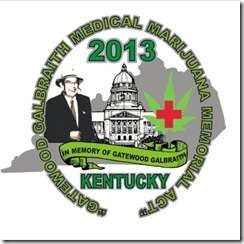
Kentucky’s 2013 Gatewood Galbraith Medical Marijuana Memorial Act

Jacob JonesPublished:October 15, 2012 6:52PM


ggmmma

Kentuckians!

The states of Alaska, Arizona, California, Colorado, Connecticut, Delaware, Hawaii, Maine, Michigan, Montana, Nevada, New Mexico, New Jersey, Oregon, Vermont, Rhode Island, and Washington, as well as the District of Columbia, have removed state-level criminal penalties from the medical use and cultivation of marijuana. Kentucky joins in this effort for the health and welfare of its citizens.

The above text is from the first section of the Gatewood Galbraith Medical Marijuana Memorial Act, this bills fate will be determined during our 2013 General Assembly. Also within the first section of the Act is the text below:

Marijuana’s recorded use as a medicine goes back nearly five thousand (5,000) years. Modern medical research has confirmed the beneficial uses for marijuana in treating or alleviating the pain, nausea, and other symptoms associated with a variety of debilitating medical conditions, including cancer, multiple sclerosis, and HIV/AIDS, as found by the National Academy of Sciences' Institute of Medicine in March 1999;

Studies published since the 1999 Institute of Medicine report have continued to show the therapeutic value of marijuana in treating a wide array of debilitating medical conditions. These include relief of the neuropathic pain caused by multiple sclerosis, HIV/AIDS, other illnesses and injuries that often fail to respond to conventional treatments, and relief of nausea, vomiting, and other side effects of drugs used to treat HIV/AIDS and hepatitis C, increasing the chances of patients continuing on life-saving treatment regimens.

Marijuana has many currently accepted medical uses in the United States, having been recommended by thousands of licensed physicians to more than five hundred thousand (500,000) patients in states with medical marijuana laws. Marijuana's medical utility has been recognized by a wide range of medical and public health organizations, including the American Academy of HIV Medicine, the American College of Physicians, the American Nurses Association, the American Public Health Association, the Leukemia & Lymphoma Society, and many others.

Data from the Federal Bureau of Investigation's Uniform Crime Reports and the Compendium of Federal Justice Statistics show that approximately ninety-nine (99) out of every one hundred (100) marijuana arrests in the United States are made under state law, rather than under federal law. Consequently, changing state law will have the practical effect of protecting from arrest the vast majority of seriously ill patients who have a medical need to use marijuana

States are not required to enforce federal law or prosecute people for engaging in activities prohibited by federal law. Therefore, compliance with Sections 1 to 24 of this Act does not put the state of Kentucky in violation of federal law; and

State law should make a distinction between the medical and nonmedical uses of marijuana. Therefore, the purpose of Sections 1 to 24 of the Gatewood Galbraith Medical Marijuana Memorial Act is to protect patients with debilitating medical conditions, as well as their practitioners and providers, from arrest and prosecution, criminal and other penalties, and property forfeiture, if such patients engage in the medical use of marijuana.

You’ve just read most of section 1 from the Gatewood Galbraith Medical Marijuana Memorial Act. Thank you. The next sections of this Act define this crucial medical program and are followed by needed protections along with guiding restrictions. The enacting of this bill benefits our loved ones and people we all know, who need medical marijuana to improve the quality of their lives.

The following are debilitating medical conditions which may qualify one to become a Kentucky medical marijuana patient:

Cancer, glaucoma, positive status for human immunodeficiency virus, acquired immune deficiency syndrome, hepatitis C, amyotrophic lateral sclerosis, Crohn's disease, agitation of Alzheimer's disease, post-traumatic stress disorder, or the treatment of these conditions;

A chronic or debilitating disease or medical condition or its treatment that produces one (1) or more of the following: cachexia or wasting syndrome; severe, debilitating pain; severe nausea; seizures; or severe and persistent muscle spasms, including but not limited to those characteristic of multiple sclerosis.

Please inform your districts congressmen of your support for the Gatewood Galbraith Medical Marijuana Memorial Act and urge their co-sponsor for the 2013 General Assembly.

Official record of the bill can be found at http://www.lrc.ky.gov/record/13rs/SB11.htm

CONTINUE READING…

States Legalizing Marijuana Will Violate Federal Law, Trigger Constitutional Showdown: DEA, Drug Czars

The Huffington Post | By Matt Ferner Posted: 10/15/2012 3:13 pm EDT


On a Monday teleconference call, former Drug Enforcement Agency administrators and directors of the Office of National Drug Control Policy voiced a strong reminder to the U.S. Department of Justice that even if voters in Colorado, Oregon and Washington pass ballot measures to legalize marijuana use for adults and tax its sale, the legalization of marijuana still violates federal law and the passage of these measures could trigger a "Constitutional showdown."

The goal of the call was clearly to put more pressure on Attorney General Eric Holder to make a public statement in opposition to these measures. With less than 30 days before Election Day, the DOJ has yet to announce its enforcement intentions regarding the ballot measures that, if passed, could end marijuana prohibition in each state.

"Next month in Colorado, Oregon and Washington states, voters will vote on legalizing marijuana," Peter Bensinger, the moderator of the call and former administrator of the DEA during President Gerald Ford, Jimmy Carter and Ronald Reagan administrations, began the call. "Federal law, the U.S. Constitution and Supreme Court decisions say that this cannot be done because federal law preempts state law."

Bensinger added: "And there is a bigger danger that touches every one of us -- legalizing marijuana threatens public health and safety. In states that have legalized medical marijuana, drug driving arrests, accidents, and drug overdose deaths have skyrocketed. Drug treatment admissions are up and the number of teens using this gateway drug is up dramatically."

Bensinger was joined by a host of speakers including Bill Bennet and John Walters, former directors of the While House Office of National Drug Control Policy; Chief Richard Beary of the International Association of Chiefs of Police (IACP); Dr. Robert L. DuPont, founding director of the National Institute on Drug Abuse (NIDA) and who was also representing the American Society of Addiction Medicine (ASAM) and several others.

In response to the drug warriors calling out Holder again to take a strong public stance against these marijuana legalization measures, Mason Tvert, co-director of the Campaign to Regulate Marijuana Like Alcohol, the group behind Colorado's Amendment 64 said to The Huffington Post:

We believe anything claimed by participants on the call today needs to be taken with many grains of salt. These people have made a living off marijuana prohibition and the laws that keep this relatively benign substance illegal. The nation wastes billions of taxpayer dollars annually on the failed policy of marijuana prohibition and people like Bill Bennett and John Walters are among the biggest cheerleaders for wasting billions more. The call today should be taken as seriously as an event by former coal industry CEOs opposing legislation curtailing greenhouse gas emissions. They are stuck in a certain mindset and no level of evidence demonstrating the weakness of their position will change their views.

This is an election about Colorado law and whether the people of Colorado believe that we should continue wasting law enforcement resources to maintain the failed policy of marijuana prohibition. Our nation was founded upon the idea that states would be free to determine their own policies on matters not delegated to the federal government. The Controlled Substance Act itself acknowledges that Congress never intended to have the federal government fully 'occupy the field' of marijuana policy. We hope the Obama administration respects these state-based policy debates. If Amendment 64 is adopted by the people of Colorado, there will be sufficient time before any new businesses are established for state and federal officials to discuss the implications.

Today's call elaborated on a September letter that nine former DEA heads sent to Holder strongly urging him to oppose Amendment 64 in Colorado, Initiative 502 in Washington and Measure 80 in Oregon. "To continue to remain silent conveys to the American public and the global community a tacit acceptance of these dangerous initiatives," the nine said in the letter to holder obtained by Reuters.

A month before the 2010 election in California, Holder vowed to "vigorously enforce" federal marijuana laws and warned that the government would not look the other way and allow a state marijuana market to emerge. California's Proposition 19 was narrowly defeated in 2010 and the pressure is on Holder again to voice opposition to these 2012 measures.

When pressed by a reporter during a Q & A following the call if the group was at all surprised that Holder had not yet made a statement about the measures, former drug czar John Walters replied, "I think it's shocking. All you have to do is say things that this administration has already said. It would help enormously and I think it would defeat these measures."

Both Colorado and Washington's pot ballot measures are quite popular with voters, according to recent polling and have been backed by an increasingly diverse group across a range of ideological perspectives.

In Colorado, if marijuana is legalized it would be taxed and regulated similar to alcohol and tobacco. It would give state and local governments the ability to control and tax the sale of small amounts of marijuana to adults age 21 and older. According to the Associated Press, analysts project that that tax revenue could generate somewhere between $5 million and $22 million a year in the state. An economist whose study was funded by a pro-pot group projects as much as a $60 million boost by 2017.

CONTINUE READING……(VIDEO)

Saturday, October 13, 2012

The 10 Best Politicians on Pot Reform

From Barney Frank to Ron Paul, these elected leaders are challenging the government's pointless war on marijuana

Marijuana

By Kristen Gwynne

October 9, 2012 3:16 PM ET

This month marks the 75th anniversary of marijuana prohibition in America – and the evidence suggests that the government ban may finally be on its way out. Last year, for the first time ever in this country, a Gallup poll found that a majority of Americans think marijuana should be legal, and several states have legalization bills on their ballots this fall.

Nine Signs That Pot Legalization Is Coming Soon

Despite this changing landscape, most national politicians have been slow to adapt their stances on weed. But there are a number of political power players fighting to reform the pot policies that lock up more than 800,000 Americans per year. This fall, two third-party presidential candidates – Green Party nominee Jill Stein and Libertarian nominee Gary Johnson – favor legalization. And while winning is a very long shot for either of them, there are a growing number of elected officials – both Republicans and Democrats – on the right side of this issue. Read on for 10 of the strongest reform advocates in office today:
Rep. Barney Frank (D-Massachusetts)
Frank, who plans to retire next year after three decades in Congress, has never been afraid to back marijuana reform. In response to the federal war on state medical marijuana programs, Frank recently introduced legislation to prohibit such interference. The States Medical Marijuana Patient Protection Act would specify that no part of the Controlled Substances Act "shall prohibit or otherwise restrict" medical marijuana in states where it has been made legal or prescribed medically. It also calls for a review of marijuana's Schedule I classification – which defines the plant as dangerous and not medically valuable – in favor of the less-restrictive Schedule III category. Unfortunately, since being referred to committee in May, the bill has seemingly stalled.

In the meantime, Frank has continued to speak out for both medical and non-medical marijuana users. "If there's an activity that I could engage in without hurting anyone else, as an adult, but other people if they engage in it may abuse it, please don't prevent me from doing it," Frank said last month. "Whether you want to do these things or not ought to be your own choice."

Rep. Ron Paul (R-Texas)
Paul, another retiring congressman, is one of the most prominent voices for drug law reform. A sharp critic of the War on Drugs and its violations of civil liberties, Paul sees ending pot prohibition as part of his libertarian philosophy. Campaigning in the Republican presidential primary, he vowed to pardon all non-violent drug offenders if elected – a stance that made him very popular with young voters. Along with Barney Frank, Paul co-sponsored the Ending Federal Marijuana Prohibition Act of 2011, which would have amended the Controlled Substances Act to remove marijuana from the Schedule I category, leaving legalization and regulation up to the states. The bill is viewed as unlikely to pass.

Rep. Sam Farr (D-California)
Farr has been a leading legislative voice for medical marijuana patients' rights at trial. "The federal government has tilted the scales of justice towards conviction by denying medical marijuana defendants the right to present all of the evidence at trial," he recently said. In 2009 and again this summer, Farr introduced the Truth in Trials Act, which would grant medical marijuana patients the ability to present courtroom evidence on their prescription-authorized use of the drug. The bill was promptly referred to the Judiciary Committee, and will likely die before making it to a vote. Nevertheless, Farr has thrown his weight behind other medical marijuana legislation, including the Rohrabacher-Hinchey-Farr-McClintock Medical Marijuana Amendment to bar federal funding for federal raids and the Ending Federal Marijuana Prohibition Act of 2011.

Rep. Dana Rohrabacher (R-California)
A staunch Republican, Rohrabacher has called out President Obama for escalating the war on pot and has criticized federal pot prohibition as a drain on resources and an infringement on states rights. "I don't believe that you protect people by throwing them in cages," Rohrabacher said last fall. "For us to be taking people for smoking a weed and putting them in prison or jail for that is a travesty. It's against everything our founding fathers believed in and somehow we got away from that."

In May, Rohrabacher co-sponsored the bipartisan Rohrabacher-Hinchey-Farr-McClintock Medical Marijuana Amendment, which would have forbidden the Justice Department from using federal funding for raids on state-approved medical marijuana operations. (A week later, the House struck it down in a roll call vote.) Last year, he supported California's unsuccessful legalization initiative, the Regulate Marijuana Like Wine Act; he has also co-sponsored the recent Ending Federal Marijuana Prohibition Act, the States Medical Marijuana Patient Protection Act and the Truth in Trials Act.

Rep. Barbara Lee (D-California)
This August, Lee introduced the Medical Marijuana Property Rights Protection Act to defend medical marijuana operators from losing their property – a tactic the federal government has used in both threats and reality. "The people of California have made it legal for patients to have safe access to medicinal marijuana, and as a result thousands of small business owners have invested millions of dollars in building their companies, creating jobs and paying their taxes," Lee said. "We should be protecting and implementing the will of voters, not undermining our democracy by prosecuting small business owners who pay taxes and comply with the laws of their states in providing medicine to patients in need." The bill has struggled to move since being referred to committee on August 14. Lee also co-sponsored the States Medical Marijuana Patient Protection Act, the Ending Marijuana Prohibition Act of 2011 and the Truth in Trials Act.
Rep. Jared Polis (D-Colorado)
In 2010, when the feds raided a number of medical marijuana operations in Colorado, Polis spoke up in defense of his constituents. In a letter to Eric Holder, Polis urged the attorney general to enforce the Justice Department's written guidelines, which discourage federal interference with legal medical marijuana operations at the state level. Polis also co-sponsored the Medical Marijuana Patient Protection Act and the Ending Federal Marijuana Prohibition Act – but it was his showdown this June with Drug Enforcement Agency head Michele Leonhart that really earned him his stripes. When Leonhart testified before a House judiciary subcommittee, Polis pressed her on whether drugs like crack and heroin are more or less dangerous than marijuana. Leonhart contended that "all illegal drugs are bad," refusing to acknowledge any distinction between pot and harder substances. "If you don't know, you can look this up," Polis retorted. "You should know this as the chief administrator for the Drug Enforcement Agency." Video of the exchange went viral, providing a clear example of the irrational beliefs behind pot prohibition.
Rep. Early Blumenauer (D-Oregon)
As a speaker at the National Organization for the Reform of Marijuana Laws conference in 2010, Blumenauer told attendees they had reached their "decade of decision." Despite his past statements in favor of marijuana legalization, he is one of the weaker advocates on this list after failing to back Oregon's legalization initiative, Measure 80, which will be on the ballot in November. However, Blumenauer has continued to speak out for drug reform, and he has co-sponsored many of the recent pro-pot bills, including the Ending Federal Marijuana Prohibition Act, the States Medical Marijuana Patient Protection Act and the Truth in Trials Act.
Gov. Dannel Malloy (D-Connecticut)
Last year, Connecticut's governor signed a marijuana decriminalization bill into law. Instead of facing a $1,000 fine and possible jail time, marijuana offenders now must pay $150 for their first offense and between $200 and $500 for subsequent violations. This spring, Malloy also signed a new law making Connecticut the country's 17th state to legalize medical marijuana. (As his opponents often point out, Connecticut's governor has a personal stake in marijuana policy reform: His son, now in his twenties, has had multiple legal run-ins allegedly involving marijuana.)
Gov. Pete Shumlin (D-Vermont)
When Vermont legalized medical marijuana in 2004, the legislation had one gaping loophole: It did not allow for dispensaries. To assist the patients who were now legally allowed to use medical marijuana but forced to grow their own or buy on the black market, Shumlin signed a bill last summer authorizing up to four medical marijuana dispensaries in Vermont. And late last year, Shumlin joined two other governors – Washington's Christine Gregoire (a Democrat) and Rhode Island's Lincoln Chafee (an Independent) – in petitioning the Drug Enforcement Agency to reclassify marijuana, moving it out of the highly restrictive, non-medical Schedule I category to at least Schedule II, which would recognize marijuana's medical benefits. (Shumlin has been harder on so-called synthetic marijuana, recently signing a ban on chemicals commonly found in the substances. "We're not talking about a plant that is grown, like marijuana," he said. "This junk will kill you.")

Rep. John Conyers (D-Michigan)
In 2008, while serving as chairman of the House Judiciary Committee, Conyers slammed the Drug Enforcement Agency and its leader, Michele Leonhart, for executing pot raids on California's regulated medical marijuana program. Pulling few punches, he made clear his opinion that dispensary-busting was an inappropriate response by the DEA and a waste of resources. "Please explain what role, if any, emerging scientific data plays in your decision-making process to conduct enforcement raids on individuals authorized to use or provide medical cannabis under state law," he wrote in a pointed letter to Leonhart. At a press conference last summer, Conyers went further, arguing for the decriminalization of marijuana for recreational use. He also co-sponsored Frank's Ending Federal Marijuana Prohibition Act.

Read more: http://www.rollingstone.com/politics/news/the-10-best-politicians-on-pot-20121009#ixzz29Cuh4pRY

Friday, October 12, 2012

Court To Review Marijuana's Medical Benefits

Lucia Graves

lucia@huffingtonpost.com


mmj3

It started with a coalition of disgruntled Americans, then a handful of governors took up the cause last year, and now -- for the first time in nearly 20 years -- a federal court will hear oral arguments in a lawsuit challenging the classification of cannabis as a dangerous drug without medical benefits.

In the case, Americans for Safe Access v. Drug Enforcement Administration, the court will be presented with scientific evidence regarding the medicinal effects of marijuana, and is expected to rule on whether or not the Drug Enforcement Administration acted appropriately in denying a petition to reclassify cannabis, filed by a collection of public interest organizations back in 2002.

"Medical marijuana patients are finally getting their day in court," Joe Elford, chief counsel with ASA, said in a recent statement. "This is a rare opportunity for patients to confront politically motivated decision-making with scientific evidence of marijuana's medical efficacy."

Under federal law, a schedule I prohibited substance is defined as having “a high potential for abuse” and “no currently accepted medical use in treatment.” Heroine and LSD are classified alongside marijuana as schedule I, while cocaine, opium and methamphetamine are classified as schedule II, meaning they have "some accepted medical use."

Other groups, including the American Medical Association, the American Nurses Association and the American Academy of Family Physicians, support medical access to the drug or its reclassification, while the California Medical Association has called for full legalization.

Donald Abrams, chief of hematology-oncology at San Francisco General Hospital, recently described the effectiveness of medical marijuana in the treatment regimens of cancer and HIV/AIDS patients. "I see patients who have loss of appetite, nausea and vomiting from their chemotherapy, pain on and off of opiates, anxiety, depression, and insomnia," he said in a press briefing last week, adding that these are just some of the conditions that can be alleviated by the use of medical marijuana.

In its rejection of the ASA’s rescheduling petition in 2011, the DEA cited a 4-year-old Department of Health and Human Services paper that found no consensus on medical uses for marijuana, but it did not take into account studies showing the medical benefits of marijuana on the grounds the studies did not meet the standard of double-blind FDA approval trials.

"[T]here are no adequate and well-controlled studies proving (marijuana's) efficacy; the drug is not accepted by qualified experts..." wrote DEA administrator Michele Leonhart in a July 8, 2011 letter. "At this time, the known risks of marijuana use have not been shown to be outweighed by specific benefits in well-controlled clinical trials that scientifically evaluate safety and efficacy."

A similar petition calling for marijuana to be reclassified as a schedule II drug was filed with the DEA in 1972, and in 1988, following a federal hearing, Administrative Law Judge Francis Young ruled that marijuana should indeed be reclassified. But that verdict was rejected by then-DEA administrator John Lawn and in 1994, his rejection was upheld by the D.C. Court of Appeals.

The current case will be heard by the U.S. Court of Appeals for the D.C. Circuit on Oct. 16.

CONTINUE READING…

Law Blog Fireside: The Lawyer Protecting Oakland’s Medical Pot

By Joe Palazzolo
iStock

Oakland, Calif., is trying to keep the federal government from seizing its biggest medical-marijuana dispensary.

On Wednesday, the city took a bold step: It sued the feds, arguing that the U.S. attorney for Northern California is barred from seizing the property by the five-year statute of limitations on civil forfeiture.

Sure, it’s illegal to sell medical marijuana under federal law, but President Barack Obama and Attorney General Eric Holder have said publicly they wouldn’t pursue people who are in compliance with state law. A 2009 Justice Department memo gave the same guidance to U.S. attorneys.

California, of course, permits the sale of medical marijuana, and Oakland strictly regulates and taxes its dispensaries. Harborside Health Center, the property at issue here, has been open since 2006 and sells more than $20 million of pot annually, according to its owner.

The lawsuit argues that the Justice Department can’t snatch up Harborside Health Center, because of the doctrine of estoppel, which says, in essence, you can’t say one thing and do another. U.S. Attorney Melinda Haag has said Harborside has grown into a large-scale operation that isn’t legal even under California law.

Law Blog caught up with Cedric Chao, who is representing Oakland. When he’s not suing the federal government, Mr. Chao is co-chairman of Morrison & Foerster LLP’s international litigation and arbitration practice.

Law Blog: So this is the first case of its type?

Cedric Chao: We’re not aware of a city pushing back on a forfeiture action against a medical cannabis dispensary.

LB: We noticed you refer to medical marijuana as “cannabis” throughout the lawsuit. Any reason?

CC: No, but people refer to it both ways.

LB: You argue that DOJ can’t go after Harborside because it opened six years ago — exceeding the five-year statute of limitations. Isn’t there a good argument that, since Harborside continued to break federal law until this year, the clock shouldn’t start ticking until after the dispensary stopped selling medical cannabis?

CC: Well there’s actually a case out there in the Sixth Circuit that addresses this issue. In the context of a gambling operation, it held that the statute of limitations began on the first discovery of illegal conduct by the government and that the government was not allowed to claim that the statute of limitations was reset every single day.

LB: I guess the government can’t credibly argue it wasn’t aware of the Oakland dispensaries until now.

CC: They had websites, they had advertisements, they wanted the patient population to know they had safe access to medical cannabis.

LB: But the fact remains. Medical marijuana is illegal under federal law. How do you convince a federal judge that just because the attorney general tells his troops not to go after certain individuals that means it’s OK to break federal law?

CC: Seventeen states plus the District of Columbia have agreed that it is lawful to sell cannabis for medical purposes, so, clearly, there’s a division of thought. And clearly the top officials of our government also believed there were medical benefits to cannabis, otherwise they would not have said publicity that DOJ’s resources will not be used to prosecute where patients, caregivers and dispensaries are acting in conformity with state law. They well knew that people were hanging on their every word. So how is it, after their words and actions and people acting in reliance on those, can they reverse course and say, “Never mind?”

LB: So you’re doing this case pro bono?

CC: Yes.

LB: It’s a controversial issue. Do you worry about getting pegged as the cannabis lawyer?

CC: As a lawyer, you take an oath and you have a client and you do the best for your client. This issue has important public ramifications, and if I didn’t think it was important, I wouldn’t take it.

LB: Thanks, Cedric.

CONTINUE READING…

Saturday, October 6, 2012

Ed Forchion, The N.J. Weedman…

mmj3


Latest update on his case in New Jersey in which he is hoping to utilize “Jury Nullification” .